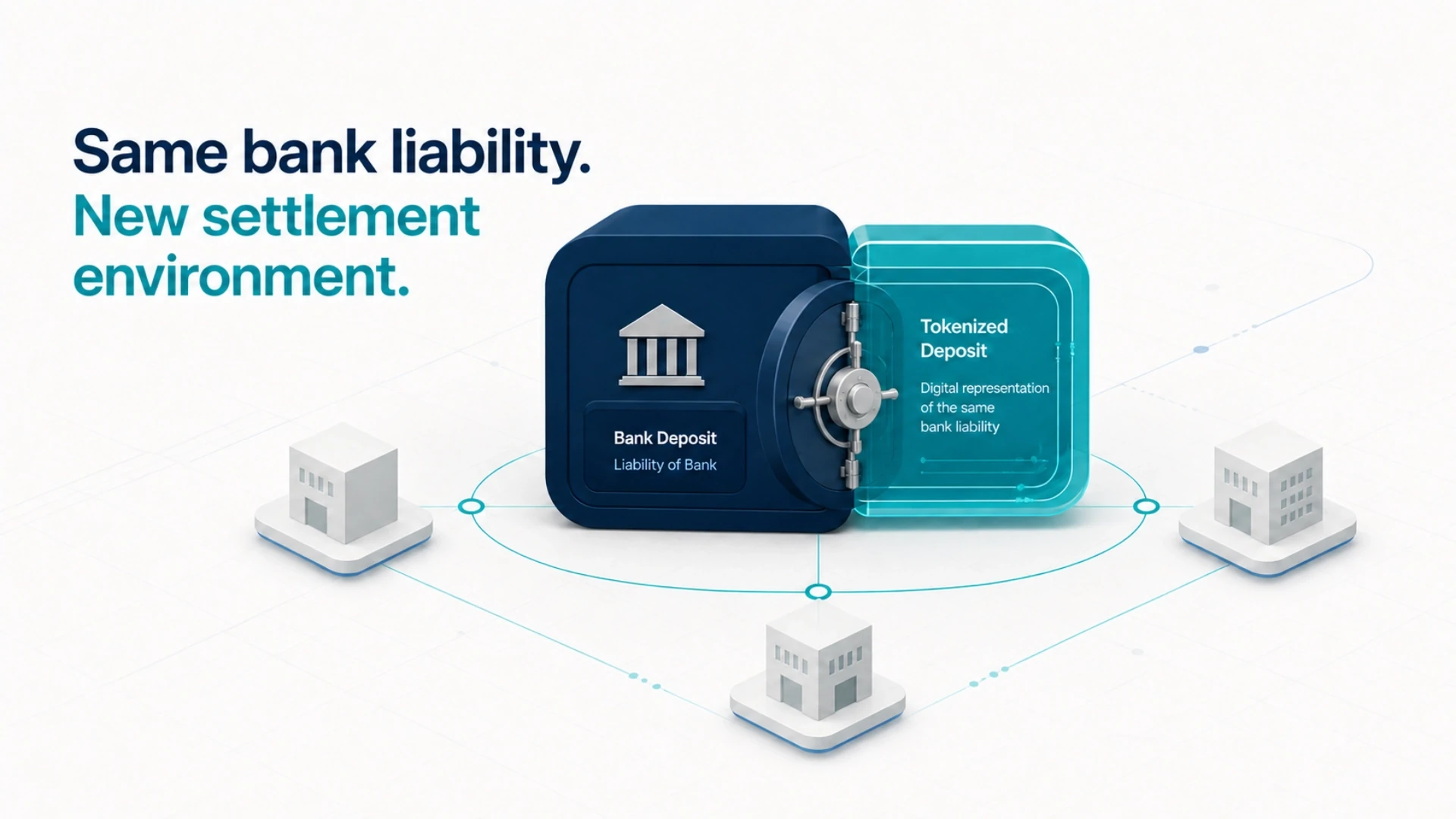
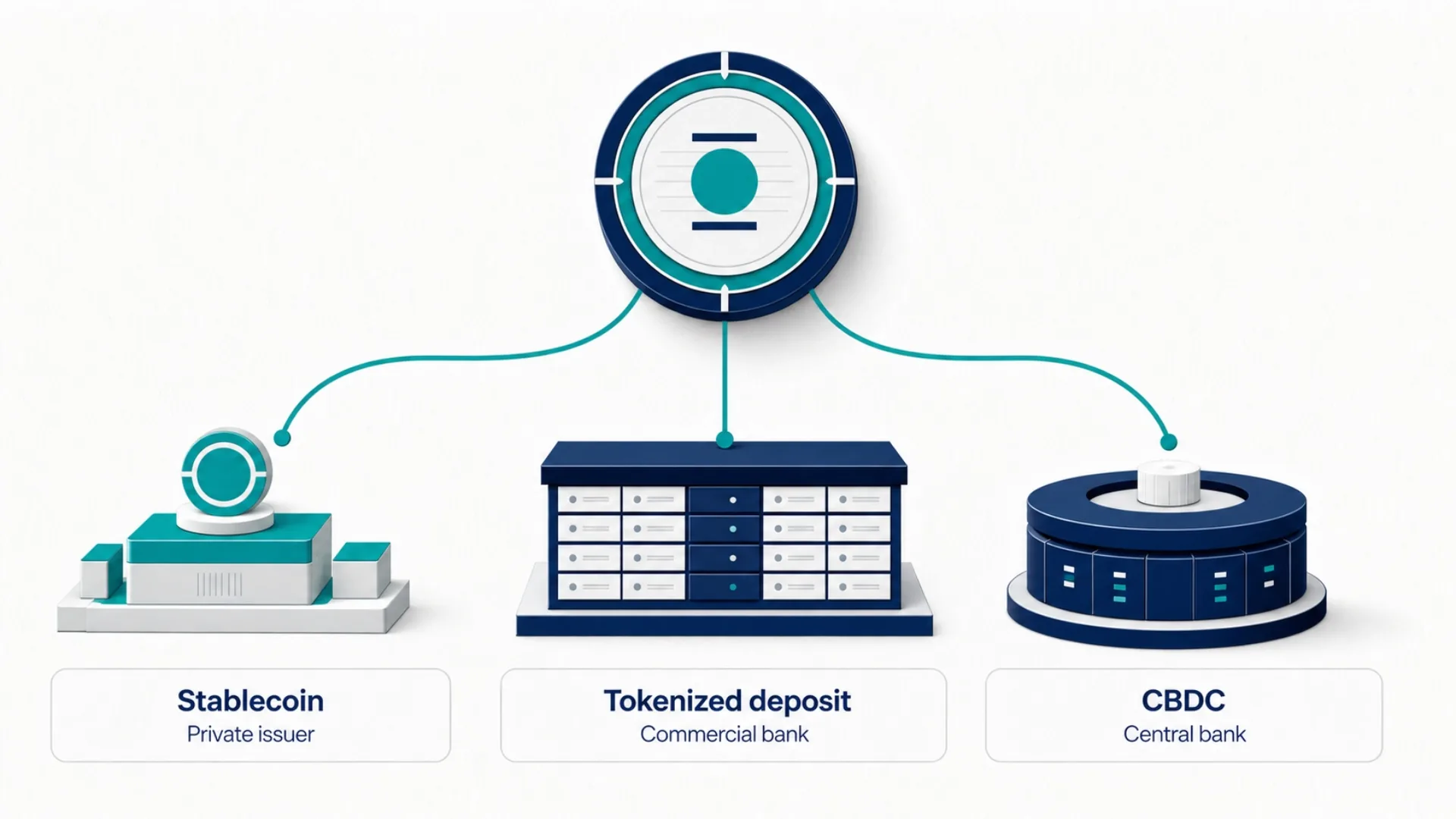
A stablecoin, a tokenized bank deposit and a central bank digital currency can all appear as digital tokens. But they are not economically or legally the same thing.
Each represents a different claim on a different issuer. That affects how it is redeemed, what risks the holder takes, how it is regulated, and where it may fit in the future of payments.
This matters because discussions around tokenized money often collapse everything into one broad idea: money on blockchain. That is too simplistic. The more useful question is:
Who owes you the money behind the token?
The answer may be a private issuer, a commercial bank, or a central bank. Understanding that distinction is the starting point for understanding stablecoins, tokenized deposits, and central bank digital currencies, or CBDCs.
What is tokenized money?
Tokenized money is money represented as digital tokens on programmable infrastructure, such as a distributed ledger or another shared digital platform.
A token may represent a claim on a commercial bank, a central bank, or a private issuer. It can carry rules for how it is transferred, redeemed, or used in a transaction.
The technology alone does not determine what kind of money it is.
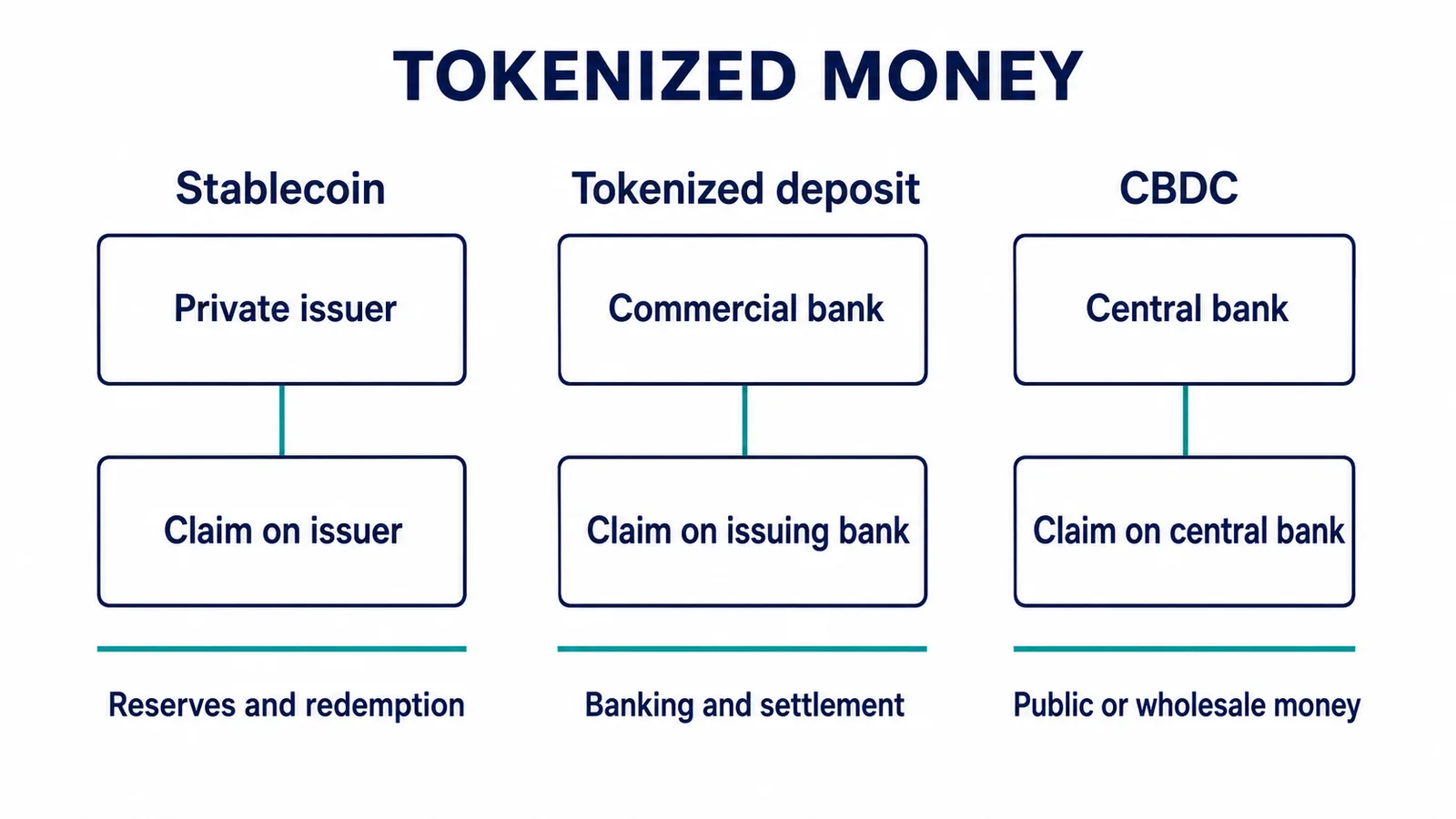
A tokenized deposit, for example, may represent a customer’s claim on their bank. A stablecoin may represent a claim on a private issuer and its reserves. A CBDC is a direct claim on a central bank.
The Bank for International Settlements, or BIS, describes tokenization as representing claims on a programmable platform. Its potential value is not merely a new database. It is the ability to connect records, rules, and transaction logic more directly. BIS: Blueprint for the future monetary system
Why tokenize money in the first place?
Tokenized money matters not because money becomes a token, but because it could make cross-border settlement safer, reduce trapped liquidity, and eventually allow payments to respond to business conditions.
The near-term opportunity is better financial plumbing. The longer-term opportunity is more intelligent financial workflows.
1. Atomic settlement: reduce risk and delay
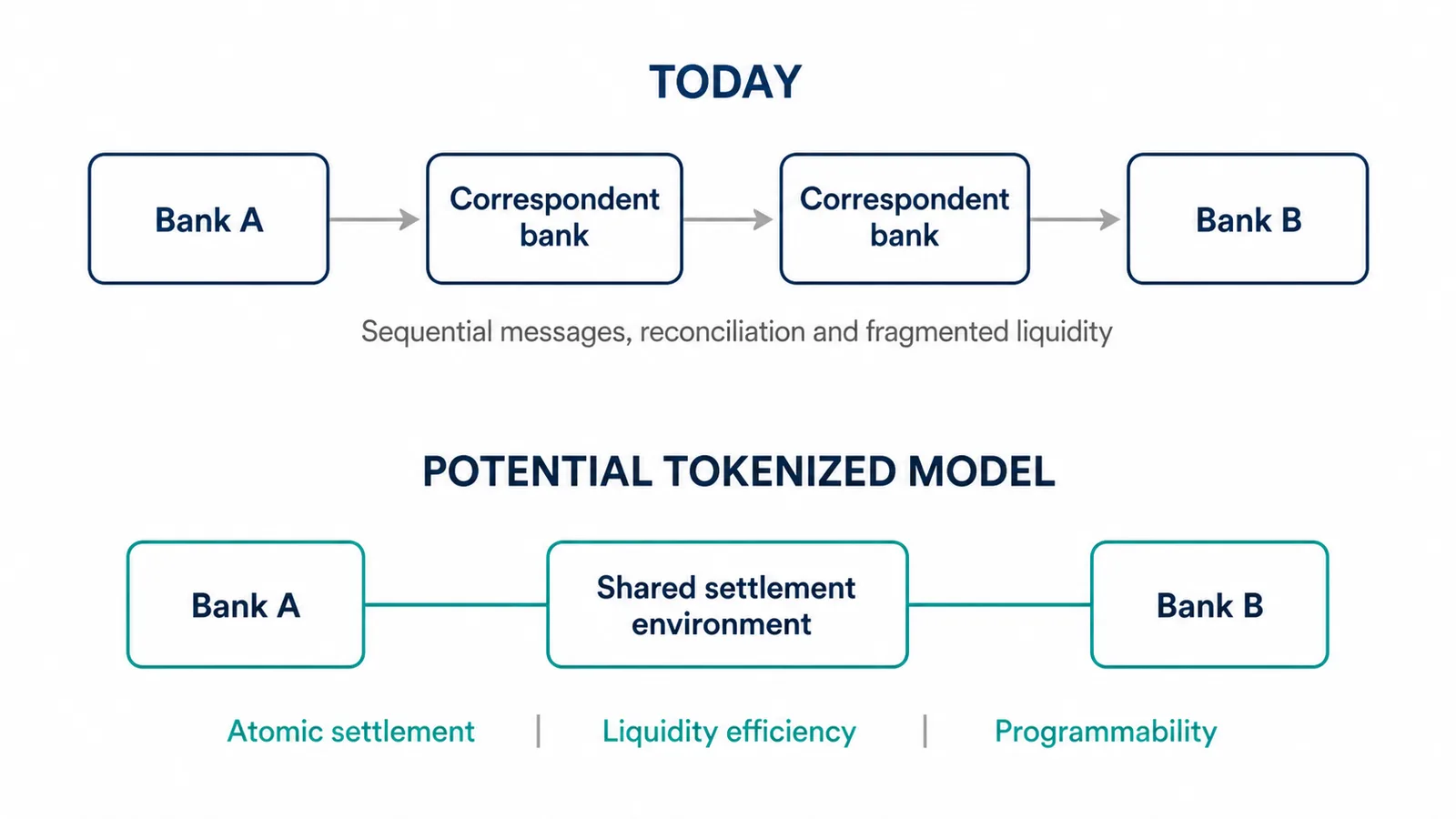
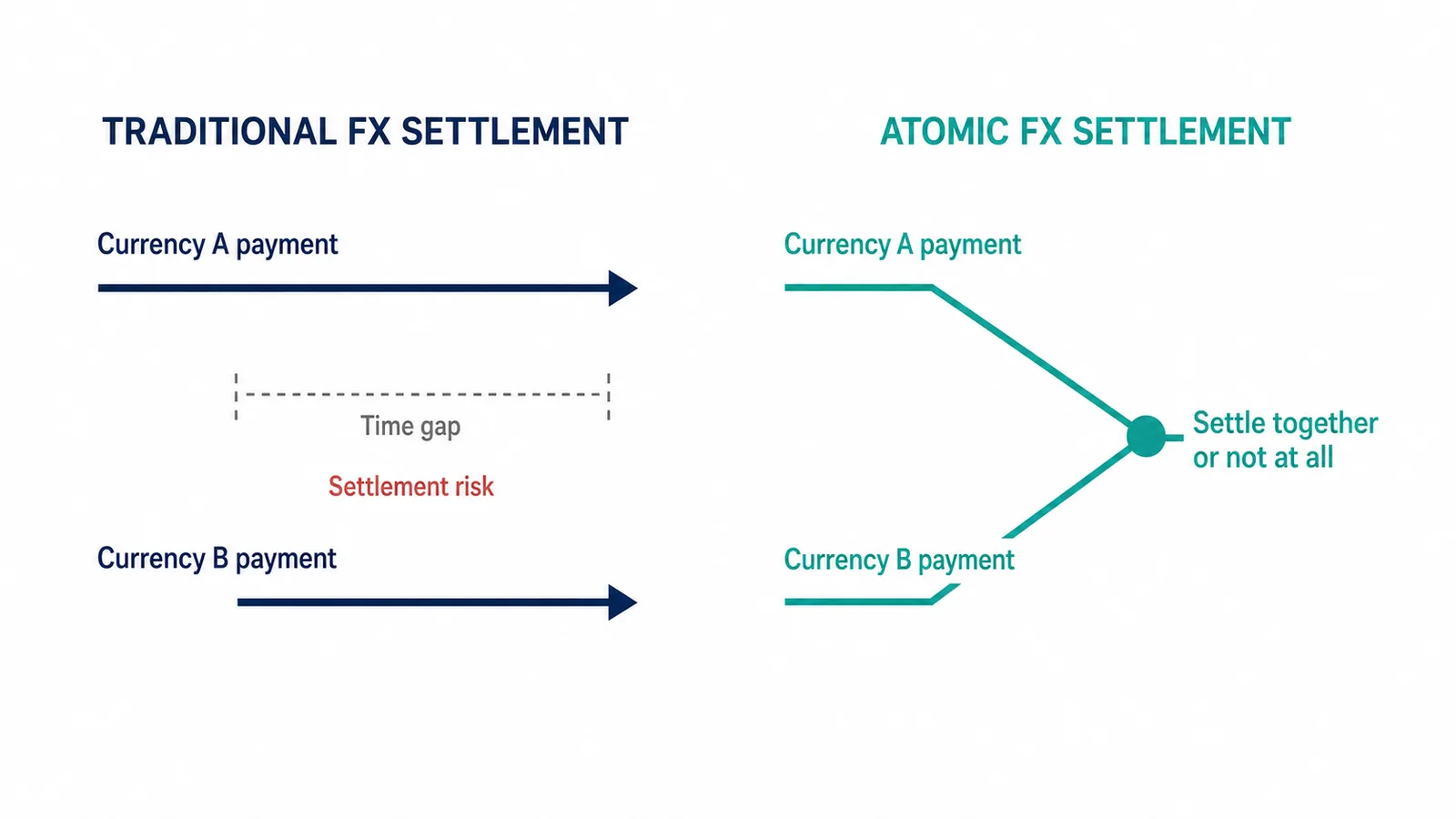
Cross-border payments often involve several institutions, currencies, messages, compliance checks, and operating hours. The process can be sequential. One party may be waiting for another leg of a transaction to complete, while liquidity remains tied up and settlement risk remains open.
Tokenization may enable atomic settlement. This means the linked legs of a transaction settle together, or the transaction does not settle at all.
For example, a cross-currency transaction could be designed so that the MYR leg and foreign-currency leg transfer simultaneously. Neither side is left having delivered its currency while waiting for the other side to complete.
Atomic settlement should not be confused with instant cross-border payments.
It is a settlement model, not a guarantee that every international payment becomes immediate. Faster settlement still depends on FX liquidity, compliance processes, legal rules, participant access, and the design of the infrastructure.
But where the wider system supports it, atomic settlement can reduce settlement risk, shorten settlement cycles, and reduce manual reconciliation.
The BIS is exploring this in Project Agorá, which tests atomic settlement of tokenized commercial-bank deposits and tokenized central-bank reserves in wholesale cross-border payments. BIS Project Agorá
2. Liquidity efficiency: reduce fragmented pre-funding
This may be the most important near-term benefit for banks and payment providers.
In traditional cross-border arrangements, banks and payment providers often hold balances in multiple correspondent accounts, currencies, and locations. Some of that liquidity is pre-funded so payments can be completed during different operating hours and across disconnected systems.
That creates a liquidity-management problem. Cash may be available somewhere in the network, but not in the right currency, account, or location when it is needed.
A shared tokenized settlement environment could reduce the amount of liquidity that needs to remain idle purely because payment processes are slow, fragmented, and sequential. It may also improve visibility over available balances and make it easier to coordinate liquidity across institutions.
The important claim is not that tokenization eliminates pre-funding. It does not eliminate the need for liquidity, FX, credit risk management, or access to settlement assets.
A more accurate statement is:
Tokenization could reduce pre-funding needs and make cross-border liquidity more efficient.
The BIS identifies siloed liquidity as a major cross-border payment friction. Its recent work suggests that tokenized designs could shorten settlement cycles and lower pre-funding needs, subject to appropriate governance, legal, and liquidity arrangements. BIS: Anchoring trust in money
3. Programmability: the longer-term upside
Programmability is real, but it should not be treated as the immediate commercial case for every business payment.
The near-term value is more likely to come from safer settlement and better liquidity management. Programmability becomes more meaningful once banks, payment providers, businesses, and regulators can operate across interoperable and trusted infrastructure.
At that stage, a payment could be designed to execute only when agreed conditions are met. Examples could include:
- releasing payment when goods have been verified as shipped;
- settling an FX transaction only when both currency legs are ready;
- triggering a supplier payment after internal approval;
- embedding certain compliance or transaction rules into the workflow; or
- managing collateral and treasury movements with less manual intervention.
The key idea is not that money becomes autonomous. It is that payment rules can become more connected to the underlying business process.
The near-term opportunity is better settlement and liquidity management. The longer-term opportunity is to make money responsive to business conditions.
The three main forms of tokenized money
1. Stablecoins
Stablecoins are privately issued digital tokens designed to maintain a stable value against a reference asset, most commonly a fiat currency such as the US dollar.
In practice, a stablecoin’s usefulness depends on more than its label. Important questions include:
- What assets back it?
- Who manages those reserves?
- Who has a legal right to redeem it?
- Can all holders redeem directly, or only selected participants?
- How quickly can redemption occur?
- Which rules and regulators apply?
Stablecoins are already widely used in digital-asset markets. They may also have a role in some cross-border treasury and settlement workflows, particularly where participants want to move value outside conventional banking hours.
However, stablecoins are not equivalent to risk-free public money. Their ability to maintain value depends on the issuer’s reserves, redemption arrangements, operational resilience, legal structure, and market confidence.
The Financial Stability Board has emphasised the need for robust legal claims, timely redemption, clear governance, disclosures, and effective risk management for global stablecoin arrangements. FSB stablecoin recommendations
2. Tokenized deposits
Tokenized deposits are commercial-bank deposits represented on programmable infrastructure.
The customer still holds a claim on the bank, much as they do with an ordinary deposit account. The difference is the form and functionality through which that deposit can be transferred or used.
This is why tokenized deposits should not be thought of as simply bank-issued stablecoins.
A stablecoin is generally a transferable token representing a claim on a private issuer. A tokenized deposit is designed to remain within the commercial-bank money system, with the bank continuing to manage the customer relationship, compliance obligations, liquidity, and settlement arrangements.
For banks, tokenized deposits may support use cases such as:
- corporate treasury workflows;
- programmable business payments;
- settlement of tokenized securities or other assets;
- conditional trade-finance processes; and
- more integrated cross-border payment arrangements.
The attraction is not necessarily replacing bank deposits. It is making familiar bank money more programmable and easier to connect with new forms of financial infrastructure.
3. Central bank digital currencies
A central bank digital currency, or CBDC, is digital money issued by a central bank. It is a direct liability of that central bank.
There are two broad categories.
Retail CBDCs
Retail CBDCs are intended for public use by households and businesses. They are often described as a digital complement to cash.
A retail CBDC raises significant public-policy questions around privacy, access, resilience, financial inclusion, and the possible movement of deposits away from commercial banks.
Wholesale CBDCs
Wholesale CBDCs are designed for regulated financial institutions.
They are more relevant to interbank payments, securities settlement, FX settlement, and cross-border financial infrastructure. In practical terms, wholesale CBDC can be understood as a potentially more programmable form of central-bank settlement money for financial institutions.
For Open Valley’s audience, wholesale CBDC is likely the more important concept. It may support transactions where banks and other institutions need a trusted settlement asset alongside tokenized commercial-bank money or tokenized financial assets.
Stablecoins vs tokenized deposits vs CBDCs
| Question | Stablecoin | Tokenized deposit | CBDC |
|---|---|---|---|
| Who issues it? | Private issuer | Commercial bank | Central bank |
| What is the holder’s claim on? | Issuer and its reserve or redemption structure | Issuing bank | Central bank |
| Who may use it? | Depends on design and regulation | Bank customers or institutions | Public or financial institutions, depending on type |
| Typical role | Digital-asset and emerging payment use cases | Bank-led corporate and institutional workflows | Public money or wholesale settlement infrastructure |
| Main question to ask | Are reserves and redemptions robust? | How does it integrate with banking and settlement? | What access and public-policy design applies? |
The key point is this:
The difference is not whether money is on-chain. The difference is whose liability it is.
A token can move quickly on a digital platform. But the value and safety of that token still depend on the claim the holder owns.
Why the liability behind the token matters
The existing monetary system is built around different types of money that generally trade at par: cash, central-bank reserves, and commercial-bank deposits.
That arrangement depends on more than technology. It depends on central-bank settlement, bank supervision, liquidity arrangements, deposit protection, and the legal framework supporting payment finality.
Tokenized deposits can potentially inherit much of this existing structure because they remain claims on regulated commercial banks.
Stablecoins require a different trust model. The holder depends on the quality and liquidity of reserve assets, the issuer’s redemption process, the legal rights attached to the token, and the broader regulatory framework.
CBDCs are different again because they are direct central-bank liabilities.
This does not mean one form of money is universally best. It means that different forms are suited to different users and use cases.
How could tokenized money change cross-border payments?
Cross-border payments are often slower, more expensive, and less transparent than domestic ones because they involve multiple institutions, currencies, jurisdictions, operating hours, compliance processes, and correspondent-banking relationships.
A traditional business payment may look roughly like this:
Business → Sending bank → Correspondent bank or banks → Receiving bank → Supplier
Tokenized money could change parts of the settlement layer.
Stablecoins may act as a settlement or bridge asset in specific payment models. Tokenized deposits may allow commercial banks to move bank money across shared programmable infrastructure. Wholesale CBDCs may support lower-risk interbank and foreign-exchange settlement.
The potential benefits include:
- coordinated settlement across payment and FX legs;
- reduced settlement risk;
- lower reliance on fragmented pre-funding;
- fewer manual reconciliation steps;
- greater transaction visibility; and
- more conditional payments over time.
But the full payment journey still matters.
A business needs compliant onboarding, access to FX liquidity, local-currency conversion, legal certainty, error handling, and a reliable way for the recipient to receive funds. A faster token transfer does not automatically solve those requirements.
The most meaningful outcome may not be replacing banks. It may be improving how banks, payment providers, settlement assets, and business workflows connect across borders.
What does tokenized money mean for banks, fintechs, and businesses?
For banks
Banks need to consider where tokenized money fits into their existing role in deposits, lending, payments, settlement, and customer relationships.
The important questions are practical:
- Which customer problem does tokenization solve?
- Does the use case involve treasury, trade, securities, FX, or cross-border settlement?
- How will tokenized money connect with core banking, compliance, and liquidity systems?
- Should the bank issue, distribute, custody, or settle tokenized money?
For fintechs and payment providers
For fintechs, tokenization is not a shortcut around financial infrastructure. It increases the importance of choosing the right regulated partners, settlement model, compliance controls, and liquidity providers.
The test is simple: does a tokenized design materially improve the customer outcome, or does it merely add technical complexity?
For importers and exporters
Most businesses do not need to become experts in tokenization. They need answers to practical questions:
- Can I pay an overseas supplier faster?
- Can I reduce avoidable FX and payment friction?
- Can I see where a payment is in the process?
- Is the transaction compliant in each relevant market?
- What happens when something goes wrong?
Tokenized money may eventually improve some of these workflows. But businesses should evaluate solutions based on cost, reliability, compliance, liquidity, and recipient experience, not on whether a provider uses blockchain.
What is Malaysia doing?
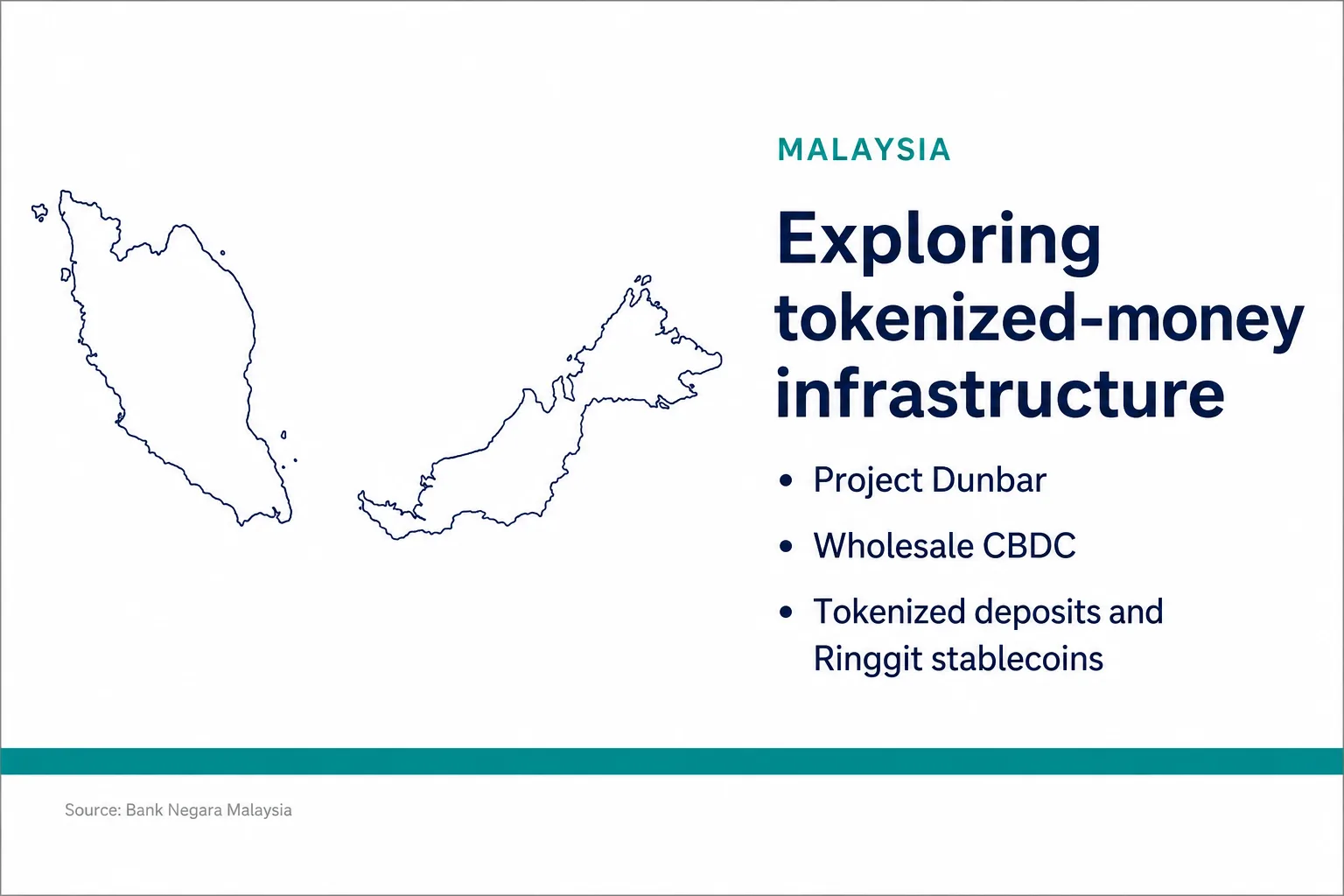
Malaysia is actively exploring the infrastructure around tokenized money.
Bank Negara Malaysia participated in Project Dunbar, an experimental multi-CBDC platform developed with the BIS and central banks from Australia, Singapore, and South Africa to explore international settlement using multiple central-bank digital currencies. BNM: Project Dunbar
BNM has also stated that it is advancing work on asset tokenization and digital money, including CBDC, tokenized deposits, and Ringgit stablecoins, with an emphasis on clear regulation, financial stability, and consumer protection. BNM Annual Report 2025
For Malaysian businesses, this does not mean that traditional payment systems are about to disappear. It means the institutions that underpin payments, trade, and treasury are actively exploring the technology and rules that may shape future settlement models.
Will one form of tokenized money win?
Probably not.
Stablecoins may serve certain digital-asset, global-treasury, and payment use cases. Tokenized deposits may suit bank-led corporate and institutional workflows. Wholesale CBDCs may support trusted settlement between regulated financial institutions. Retail CBDCs, where introduced, will depend heavily on each jurisdiction’s policy choices.
The future of money is unlikely to be stablecoins versus tokenized deposits versus CBDCs.
It is more likely to be a mixed system in which different forms of money serve different users, risks, and settlement needs.
The key is not choosing the most fashionable technology. It is understanding what sits behind the token, and whether it makes a real payment or business process better.
Frequently asked questions
Is tokenized money the same as cryptocurrency?
No. Tokenized money represents a monetary claim or payment instrument. It may use similar technology to crypto-assets, but it is distinct from volatile assets such as Bitcoin.
Are stablecoins a form of tokenized money?
Yes. Stablecoins are one private form of tokenized money, but they are not the only form.
Are tokenized deposits the same as stablecoins?
No. A tokenized deposit is a claim on a commercial bank. A stablecoin is generally a private issuer’s token backed by a reserve and governed by its own redemption structure.
What is the difference between a CBDC and a stablecoin?
A CBDC is a direct liability of a central bank. A stablecoin is generally issued by a private entity and aims to maintain value through reserves and redemption arrangements.
Can tokenized money make cross-border payments cheaper?
Potentially, but not automatically. Cost and speed still depend on FX liquidity, compliance, banking access, local payment rails, legal rules, and operational processes.
Is Malaysia launching a CBDC?
Malaysia is actively exploring CBDC and tokenization use cases. Refer to current BNM announcements for the latest position rather than assuming a retail CBDC launch.
Source list
- Bank for International Settlements, Blueprint for the future monetary system
- Bank for International Settlements, Project Agorá
- Bank for International Settlements, Anchoring trust in money
- Financial Stability Board, High-level Recommendations for Global Stablecoin Arrangements
- Bank Negara Malaysia, Project Dunbar
- Bank Negara Malaysia, Annual Report 2025